
TL;DR · Direct answer
The buying decision in brief
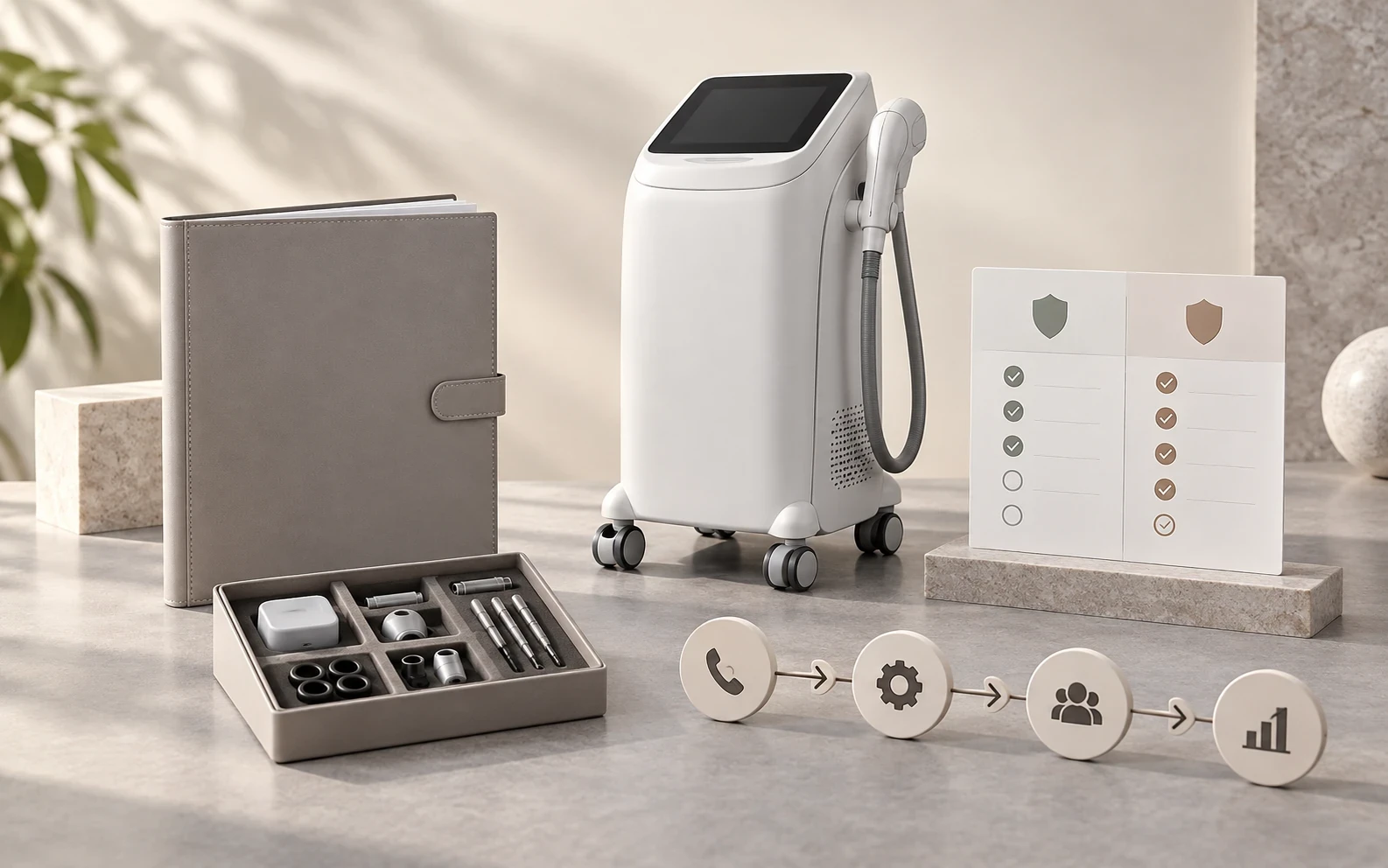
Before shipment, compare warranty, parts and support escalation as three separate responsibilities for the exact professional beauty equipment model, configuration, commercial party and destination. Record what opens a case, who owns each step, the written scope, exclusions and unresolved questions. Do not turn generic after-sales language into a warranty, parts-stock or response-time promise.
01 / Buying guide
Compare three different commitments before dispatch
Warranty, parts and support escalation are often combined into a single “after-sales” sentence, but they answer different questions. Warranty concerns a written commercial scope and remedy. Parts concerns the identity and ordering path for a component. Escalation concerns how a technical or commercial question reaches the appropriate decision maker. Treat each as its own row in the shipment review.
Start from the selected model and configuration. Link each row to the relevant quotation, order, document or contact, then record the responsible party, stated scope, exclusions, effective date if supplied and open questions. Do not infer a term from a category page, a similar model or another buyer’s transaction. The comparison should clarify what is known, not manufacture a promise.
02 / Buying guide
Agree what information is needed to open a case
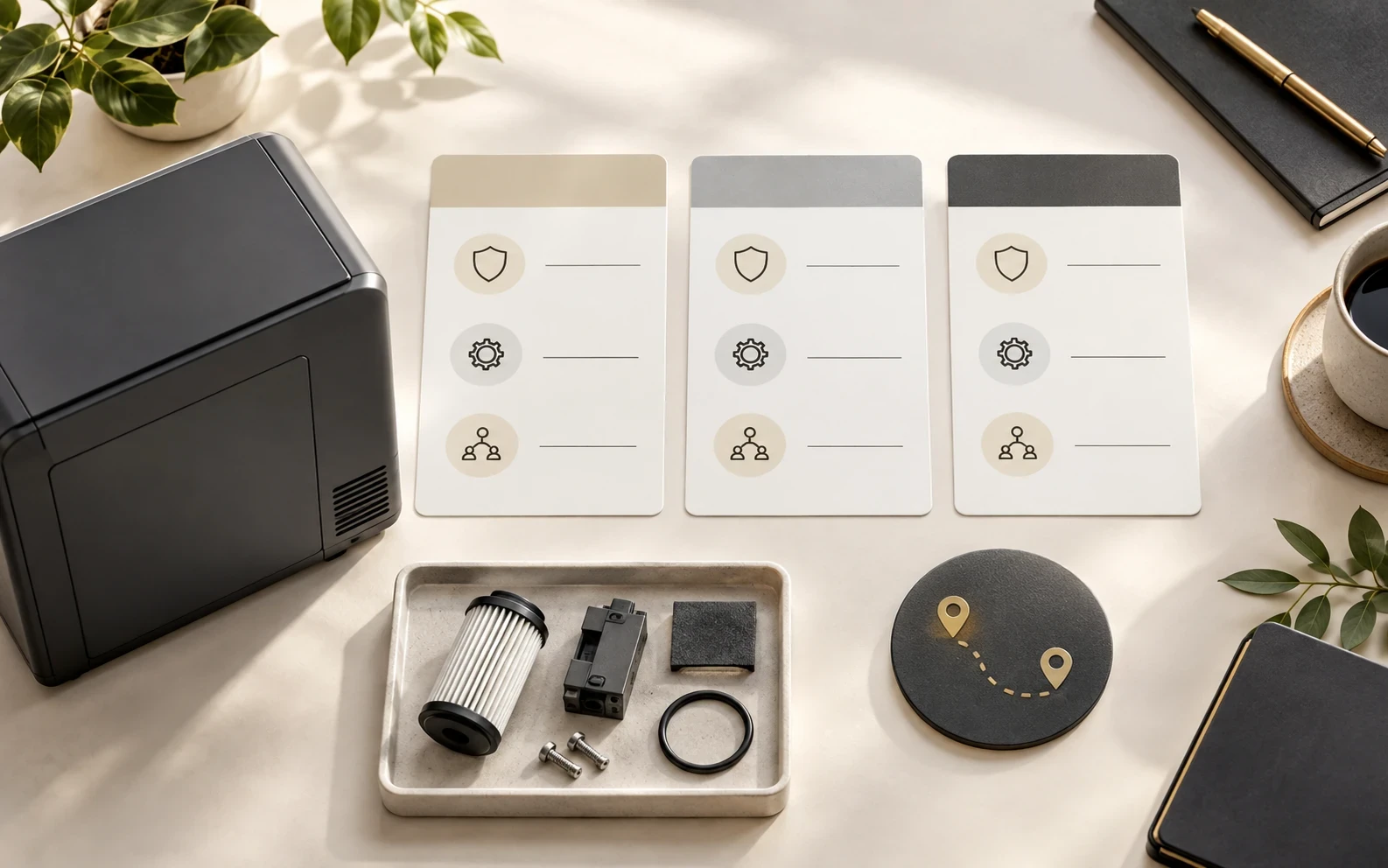
Ask the responsible party what information is required to identify a unit and understand an issue. Depending on the agreed process, this may include the model, configuration, serial or order reference where applicable, a clear description, error message, selected photos or video, packing condition and a copy of the relevant purchase document. Keep the requested evidence in the case record and handle personal data under applicable policies.
The purpose is a safe routing path, not DIY repair instruction. Do not ask unqualified users to open equipment, bypass protective features or make technical changes. If installation, service competence, product classification or local safety duties could matter, flag the issue for the appropriate qualified party before anyone acts on it.
03 / Buying guide
Control part identity as carefully as equipment identity
A future parts request should identify the component and its relationship to the actual supplied configuration. Record the part description or supplier reference when given, relevant model/configuration, source image, compatibility evidence, quantity, requester and status. A cable, handpiece or consumable that looks comparable in a photograph must not be treated as an approved substitute without evidence from the responsible party.
Ask how changes will be communicated and who confirms a substitute if the original reference is revised. Do not claim in-stock availability, pricing, universal compatibility, complimentary replacement or a lead time unless those terms are provided in writing for the transaction. This restraint protects both the distributor’s customer communication and the supplier’s scope.
04 / Buying guide
Walk through a small escalation scenario before release
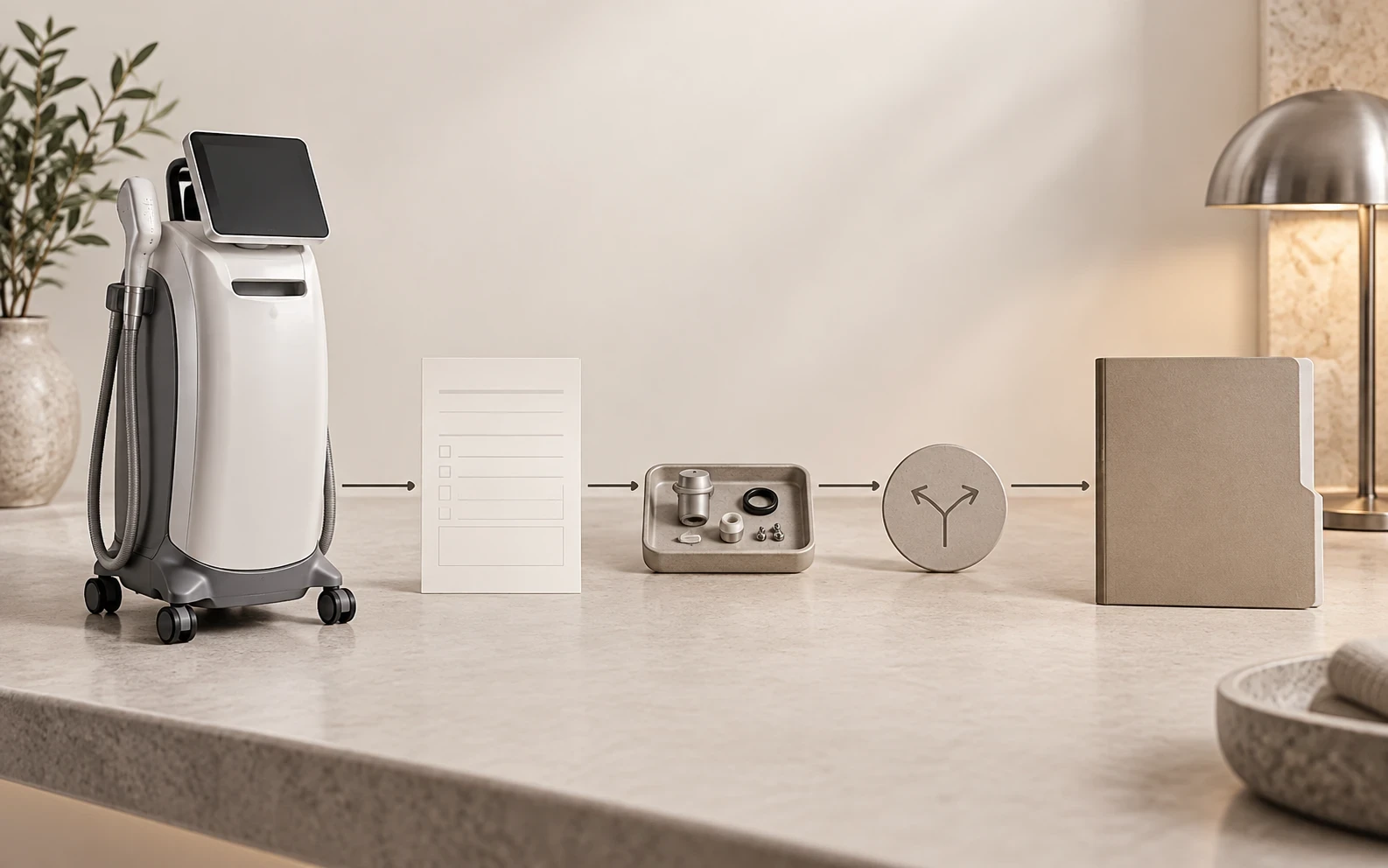
Use a neutral scenario review: visible freight damage, a setup question, an unidentified fault, a consumable query and a suspected replacement-part request. For each, write the first contact, evidence collector, decision owner, record location and next written action. If an action is unknown, turn it into an open item with a named follow-up owner rather than covering it with generic support language.
The final shipment record should preserve the current model baseline, supplied documents, written support contacts, current commercial terms and remaining questions. This guide does not offer a warranty, service agreement or installation program. Actual responsibilities depend on the model, configuration, commercial agreement, legal roles and destination market.
05 / Buying guide
Read support language for scope, not reassurance
Before comparing two offers, locate the actual source of each term: quotation, purchase agreement, warranty statement, manual, service contact note or parts list. Write down whether it identifies a model, configuration, seller or destination. Then separate what the text says from what it does not say. A phrase such as “technical support available” may be useful as a lead, but it does not by itself set a response time, replacement obligation, on-site service scope or parts availability.
If a commercial term matters to the buying decision, ask the responsible party to answer it in writing against the selected purchase scope. Keep the request focused: which model and configuration, which commercial party, which country or destination, what coverage or exclusion, what evidence is needed and who gives the final decision. Do not use this framework to infer legal rights or market compliance.
- Source document and date
- Exact model/configuration and commercial party
- Stated inclusion, exclusion and remedy path
- Destination or channel limitation
- Question owner and written follow-up
06 / Buying guide
Make the handoff record usable after the shipment leaves
The handoff record should be understandable to a buyer, distributor operations contact and later support reviewer. Keep the final model/configuration record, packing or purchase reference, supplied document versions, contact path, declared evidence requirements and open questions together. Do not publish the record or expose personal correspondence; it is an internal operational reference for the parties handling the transaction.
At receiving, compare the supplied unit and listed items against the agreed baseline before any routine use. If something differs, preserve evidence, describe the difference and use the identified contact path. Do not silently substitute a similar part, manual or machine because it appears close enough. The same record can guide a future reorder or escalation once the responsible party confirms the relevant commercial or technical scope.
Comparison visual
Three support topics that must not be substituted
Warranty
Responsible party, written scope, model/configuration link, exclusions and remedy process
Parts stock, technical diagnosis route or country-wide service availability
Parts
Part identity, model/configuration relationship, ordering route and named owner
Warranty coverage, price, compatibility across models or lead time
Escalation
First contact, required evidence, technical/commercial owner and documented next step
A remedy, replacement authorization, warranty duration or repair instruction
Decision flow
Pre-shipment support responsibility flow
- 01
Identify
Freeze the model, configuration, purchase reference and destination context.
- 02
Separate
Create distinct rows for warranty wording, parts route and escalation path.
- 03
Gather
Agree the evidence required for a future issue or component request.
- 04
Scenario-test
Walk through neutral freight, setup, fault and parts questions.
- 05
Release
Log written contacts, open items and owners with the shipment record.
Practical table
Pre-shipment warranty, parts and escalation record
Each checklist row shows every comparison field.
| Control field | Record before release | Owner / status |
|---|---|---|
| Shipment baseline | Exact model, configuration, target market and purchase reference | Commercial owner |
| Warranty wording | Document/reference, stated scope, exclusions and responsible party | Commercial reviewer |
| Support case | Evidence requested, first contact, technical owner and escalation point | Support owner |
| Parts route | Component identity fields, compatibility source and order-contact path | Parts owner |
| Scenario review | Freight, setup, fault, consumable and part-request outcomes | Operations owner |
| Open items | Question, source needed, due point and decision maker | Named follow-up owner |
Buyer FAQ
Frequently asked questions
Is a service email address the same as a warranty commitment?
No. A contact may route a question, but warranty scope, exclusions, remedy and responsible party need their own written confirmation for the exact transaction.
Can a parts list prove that a component is compatible?
Not by itself. Keep the model/configuration relationship and the responsible party’s compatibility evidence beside the component record.
What should a distributor collect before escalating a technical question?
Use the evidence requested by the responsible party, usually enough to identify the unit and issue without asking unqualified people to perform unsafe work. Record the source and context clearly.
Does this guide set a response time or repair process?
No. It is a comparison framework. Actual response, repair, warranty and parts terms must be agreed in writing for the selected model, commercial arrangement and destination.
Source notes
References and further reading
External references provide general regulatory or industry context; they do not establish approval of a listed product. Accessed 2 October 2026.
Clarify the support path for your exact shipment
Send the model, proposed configuration, target market, quantity and the current quotation or warranty/support wording. Identify the parts or escalation questions that need written confirmation before shipment.
Request a quotation →