
TL;DR · Direct answer
The buying decision in brief
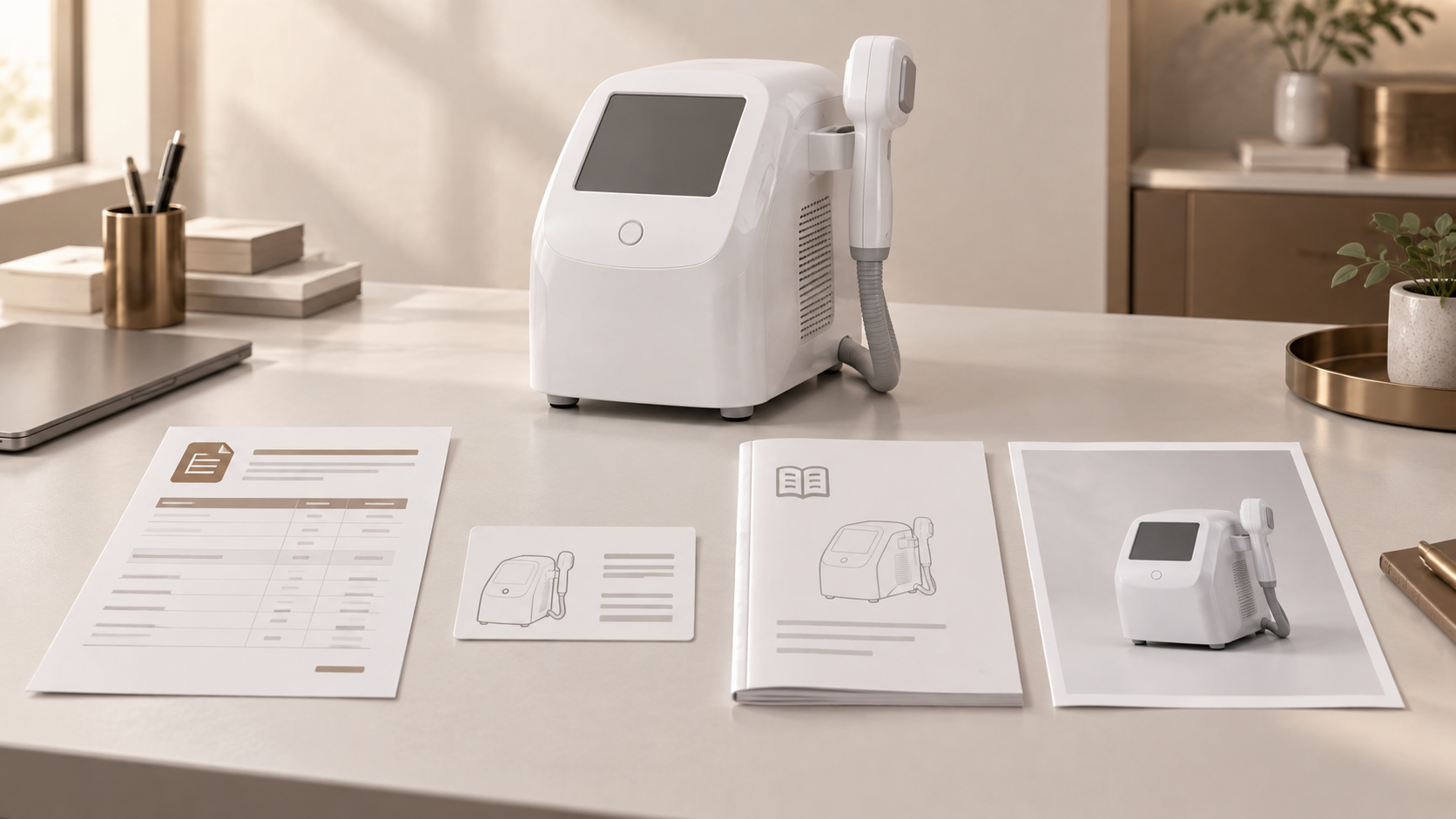
Beauty device model identity control means checking that the quotation, physical label, manual and image set all identify the same proposed model and version before the buyer relies on them. Record each source, date, revision and owner separately. A similar exterior is not evidence of equivalence, and any mismatch should remain open until it is explained or corrected in writing.
01 / Buying guide
Create one model identity control record before comparing evidence
Start with the commercial question: which exact model and configuration is the supplier proposing for this buyer, market and quantity? Give the review a buyer reference and date. Copy the model identifier exactly as it appears in the quotation, including spaces, suffixes, revision markers or supplier-defined variant names. Do not normalize different codes into one label because the cabinets look alike.
The identity record is a buyer-side control, not a certificate or a conclusion that a product is authorized in the destination market. Its purpose is narrower: keep every item used in the purchasing decision connected to the same proposed identity, expose unanswered differences and name the person responsible for obtaining clarification.
- Buyer reference and review date
- Quoted model, version and configuration context
- Destination market and quantity
- Reference source, owner and open-question status

02 / Buying guide
Match the quote, physical label, manual and images in four directions
Review each source independently before marking a match. The quote should name the offered model and configuration. A physical-label photograph should show where the model or other supplied identifier appears on the proposed unit. The manual should identify its covered model or product family and revision. The image set should be dated, linked to the quoted unit and broad enough to show the device, controls, connectors, supplied handpieces and label location where relevant.
Then compare across the four sources. A model code that matches only between the quote and an email filename is not a four-way match. A manual may cover a documented family, but the buyer should ask how the quoted variant falls within that scope rather than inferring it. Photographs can reveal a discrepancy; they cannot prove unseen components, internal design, technical values, certificate coverage or market status.
03 / Buying guide
Use a strict rule for similar-looking but differently identified models
Treat a different model identifier as a different candidate until the supplier provides a written, reviewable relationship between the two references. The same rule applies when the identifier is absent but the image shows a different interface, connector layout, handpiece set, cabinet control or label position. Visual similarity is useful for finding questions, not for closing them.
Do not replace the quoted model with a related model from a catalogue, marketplace listing, old manual or certificate screenshot. If the supplier says that one file covers a family or that one code is an internal alias, ask for the file title, holder where relevant, stated scope, version and an explanation tied to the proposed configuration. Route market or regulatory conclusions to a qualified reviewer.
04 / Buying guide
What should happen when the four references do not agree?
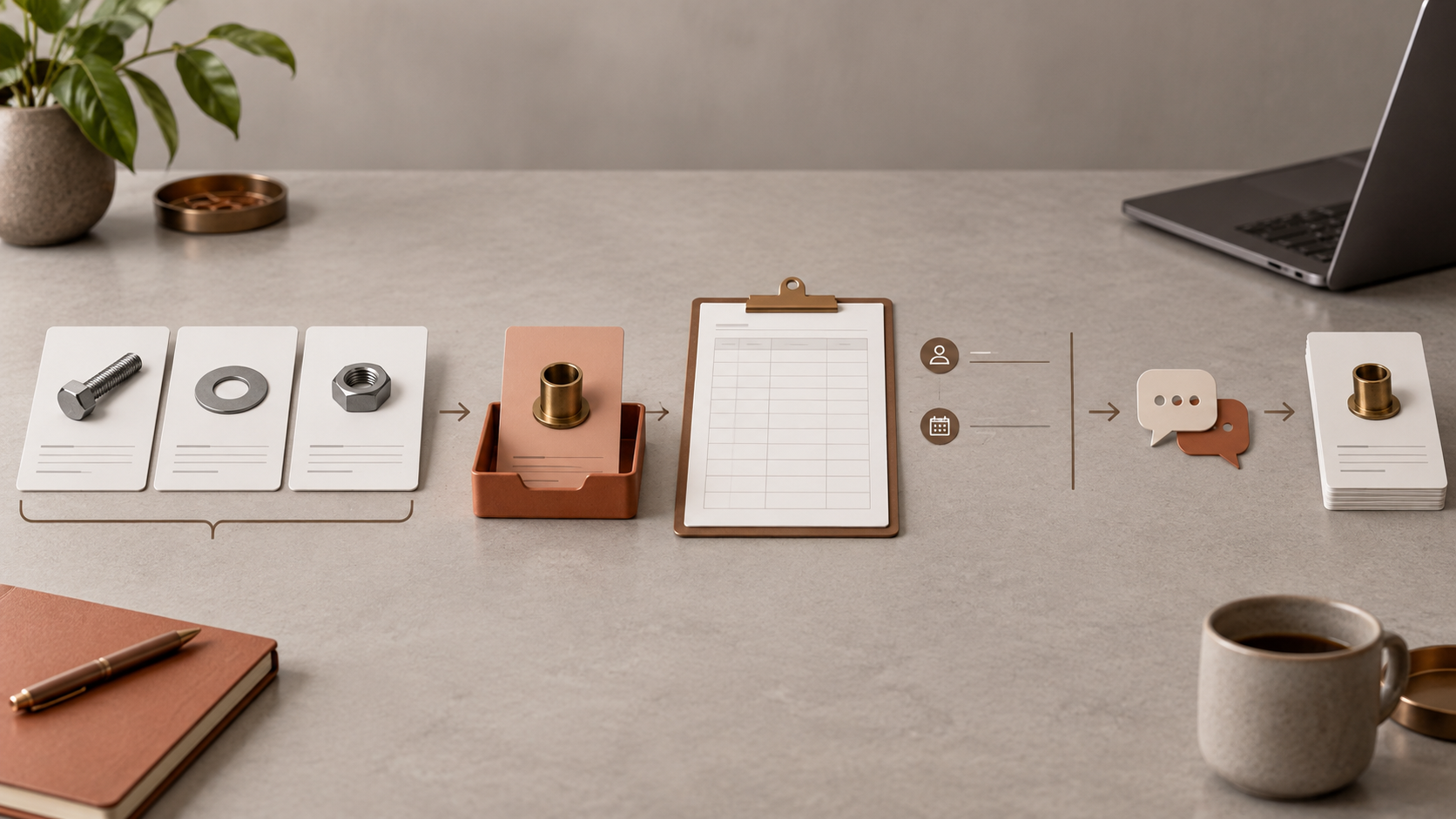
Preserve the original item and record the exact difference: source A says what, source B says what, and which purchasing decision may be affected. Classify the issue as identity, configuration, file scope, visual version or unknown. Stop using the disputed item as evidence until the supplier has answered the question or supplied a corrected reference.
A response should identify which reference is current, why the difference exists and whether the quote, configuration, packaging, manual, label or other file must change. The buyer then records accepted, rejected or still-open status. If the proposed identity changes, create a new comparison row and revisit price, included items, documents and any destination-market review rather than overwriting the earlier model.
- Capture the mismatch without editing the source
- Ask which exact model and configuration each item represents
- Request the supplier’s stated impact instead of guessing
- Record the buyer owner and written decision
- Issue a new revision when a corrected set replaces the prior set
05 / Buying guide
Record version, date, source and responsibility for every item
For each quote, label image, manual and product image set, record a descriptive title, received date, document or photo date where available, version or revision, source organization, source contact or channel, file location, reviewer and decision status. Add a short scope note explaining what the item can help confirm and what it does not establish.
These fields prevent an undated screenshot or renamed attachment from becoming the apparent current version. They also let a later receiving or support team reconstruct which references were reviewed. Keep private emails, internal notes and buyer approvals in the controlled procurement file; the public guide shows only the reusable field structure.
06 / Buying guide
Release a match only with its remaining limits visible
A four-way match means the supplied references consistently identify the proposed model at the level the buyer reviewed. It does not prove performance, internal components, compliance, certification, availability or suitability for a market. Keep those decisions in their own evidence and approval processes.
Before moving forward, list any unresolved configuration item, missing label view, manual scope question, translation issue or market-specific review beside the matched identity. Link the completed record to the RFQ and configuration baseline so an approved change later can trigger a fresh identity check rather than inheriting an old result.
Comparison visual
Quote–label–manual–image consistency check
Quotation
Exact model/version and proposed configuration are named
The line uses only a category, nickname or alternate model
Physical label
Supplied label view identifies the proposed unit and is dated to the review
Identifier is absent, cropped, different or belongs to another image
Manual
Title or scope connects the current revision to the proposed model/family
Coverage is assumed from appearance, filename or an unrelated model
Image set
Views are current, attributed to the supplier and consistent with the quoted device and label
Controls, connectors, handpieces, label location or cabinet version conflict
Decision flow
Model-reference mismatch handling flow
- 01
Isolate
Keep the original reference and stop using the disputed item as a match.
- 02
Log
Describe the exact difference, date, source and affected decision.
- 03
Clarify
Ask which model, version and configuration each item represents.
- 04
Decide
Accept, reject or keep the difference open with a named owner.
- 05
Reissue
Create a new record revision when corrected references replace the set.
Practical table
Model identity control record
Each checklist row shows every comparison field.
| Record field | What to capture | Owner / status |
|---|---|---|
| Review baseline | Buyer reference, date, target market, quantity and proposed configuration | Buyer owner |
| Model identity | Exact code, suffix, version and supplier explanation of aliases or family scope | Supplier confirms |
| Quote reference | Quote number, issue date, line item and file location | Commercial reviewer |
| Label reference | Photo date/source, label location and visible identifier | Technical or receiving reviewer |
| Manual reference | Title, revision/date, language and stated model scope | Document reviewer |
| Image reference | Set date/source and views of device, interface, connections, accessories and label | Buyer reviewer |
| Mismatch decision | Difference, stated impact, evidence, decision date and approver | Open / accepted / rejected |
Buyer FAQ
Frequently asked questions
Can a current product photo prove the model identity?
No. A photo is a visual reference. Match it with the quoted model, physical label and current manual, and ask about any visible difference. It cannot prove internal configuration, specifications, document coverage or market authorization.
What if one manual covers several related models?
Record the manual’s stated scope and ask the supplier to explain how the quoted model falls within it. Do not infer coverage from a similar name or cabinet. Keep variant-specific instructions and differences visible.
May a supplier substitute a visually identical model?
Treat the substitute as a separate candidate. Recheck identity, configuration, documents, price and market questions, then obtain a written buyer decision before it replaces the original request.
Does a four-way match prove regulatory compliance?
No. It establishes consistency among the references reviewed. Regulatory status depends on the exact product, intended use, legal entities, destination market and applicable official evidence reviewed by qualified parties.
Source notes
References and further reading
External references provide general regulatory or industry context; they do not establish approval of a listed product. Accessed 29 September 2026.
Turn the identity check into a model-specific request
Send the model, proposed configuration, target market, quantity and the versions of the quotation, label and manual you are reviewing. Identify any mismatch you need the supplier to clarify.
Request a quotation →