

TL;DR · Direct answer
The buying decision in brief
Evaluate a professional beauty equipment supplier against the exact model and configuration you intend to buy, the documents applicable to your destination market, the quality and inspection trail, and the post-sale service route. Compare like-for-like quotations only after those four items are written down.
01 / Buying guide
Start with the purchase, not the supplier brochure
A distributor needs a range it can explain and support; a clinic needs equipment that fits its services and room. Write down the buyer role, destination market, intended use, target category, required configuration and expected support before asking several suppliers for prices. Otherwise two quotations that look comparable may contain different handpieces, languages, consumables or delivery terms.
Create one comparison row per exact model code. Record the legal seller, manufacturer where relevant, model label and version, supplied modules and whether a requested option is standard or extra. Ask the supplier to point to the same identity in its quotation, product label, manual and supporting documents.
- Exact model and intended-use wording
- Included configuration and optional accessories
- Destination market and buyer’s role
- Named support and escalation route
02 / Buying guide
Verify documents at model and market level
A company logo, registration number or generic certificate does not establish that a particular machine is cleared or approved for your intended use. Request the actual document name, holder, model coverage, validity and market scope. For US medical devices, FDA explicitly distinguishes establishment registration and device listing from approval or clearance. For EU medical devices, economic operators have role-specific obligations; ask who will act as manufacturer, importer and distributor where applicable.
Quality-system information is also contextual. The FDA Quality Management System Regulation took effect on 2 February 2026 for covered finished-device manufacturers and incorporates ISO 13485:2016 by reference. This is a due-diligence prompt, not a claim that every beauty machine is a medical device or that any listed Aurum Epoch model holds a certificate.
- Request the actual file and holder, not a badge
- Check exact model, intended use and legal entity
- Record unresolved gaps before an order decision
03 / Buying guide
Test the operational handoff
Ask who checks incoming parts, assembled units, functional performance, packing and serial or batch traceability, and what order-specific record can be shared. A site visit or video call can clarify workflow, but does not replace traceable files. Compare how each supplier communicates deviations, substitutions and final acceptance.
Map the service handoff before shipment: initial training format, installation responsibilities, diagnostic evidence required for a fault, parts availability, consumable ordering, warranty exclusions and response path. Do not assume an advertised service exists for every country or model; put the agreed scope into the commercial documents.
04 / Buying guide
Score a complete offer, then request a focused quote
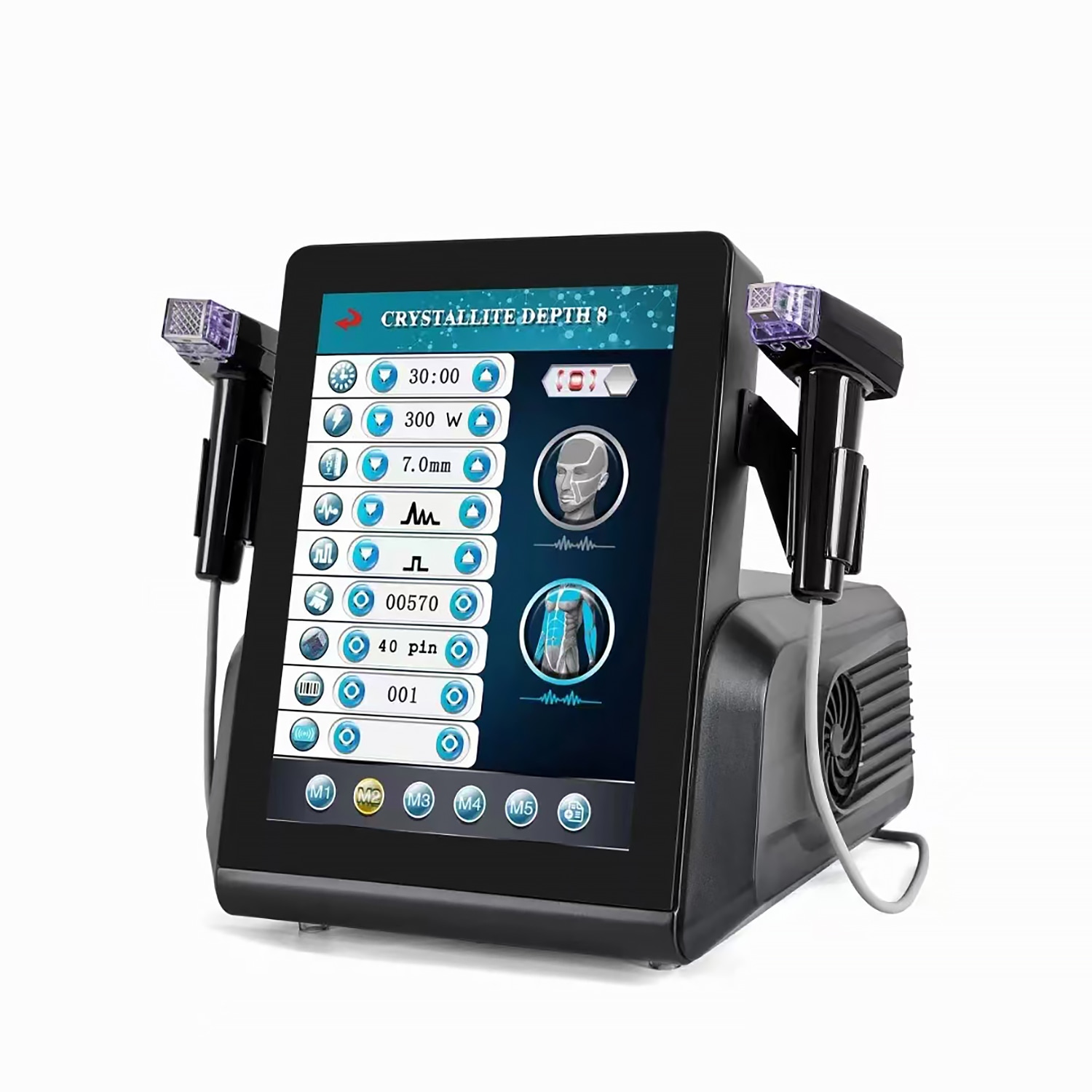
Use a pass/clarify/fail review for critical evidence, then weigh the commercial factors. A low unit price with unclear accessories, document coverage or support is not a like-for-like comparison. For each shortlisted model, ask for a line-item offer covering quantity, voltage, interface language, handpieces, packing, delivery basis, lead-time assumptions and warranty.
Aurum Epoch’s catalogue can be used to identify candidate models across anti-aging, laser and body-contouring categories. The quotation request is the point to confirm model-specific options and documents; this guide does not pre-certify or pre-approve any product.
05 / Buying guide
Use a weighted scorecard without hiding critical failures
A practical comparison can reserve separate columns for product fit, document status, supply capability and service. Assign weights only after the buying team agrees which risks matter most. For example, a distributor may value spare-parts continuity more than a clinic buying one unit, while a clinic may treat room compatibility as a non-negotiable gate. A high total score must never override a missing legal requirement or unresolved intended-use mismatch.
Record the evidence link, reviewer and review date beside each score. Use “not supplied” rather than zero when evidence is absent, so the supplier has a clear opportunity to respond. Re-score after configuration changes; an alternative handpiece or updated label may change both document scope and commercial price.
06 / Buying guide
A concise supplier RFQ that gets comparable answers
A useful request can read: “Please quote model [code] for [country], [quantity] units, [intended professional use], [voltage/plug] and [language]. List the base unit, each included handpiece, consumables, optional items, packing, delivery basis, production assumptions, warranty and parts route. Please identify the document name, holder and model/market scope for any claimed conformity.” Replace the brackets with your real requirements; do not ask suppliers to guess them.
Ask every supplier to mark deviations in the same template. If one vendor proposes a substitute model, compare it as a new row rather than silently changing the original request. This prevents a polished sales reply from disguising a different product or reduced bundle.
Comparison visual
Supplier comparison: what is actually comparable?
Product identity
Category photo or similar-looking model
Exact model code across quote, label, manual and images
Market status
Generic badge or “FDA registered” claim
Named document, holder, exact scope and applicable market
Support
“Lifetime service” headline
Written parts, warranty, diagnostics and escalation responsibilities
Decision flow
Supplier evaluation flow
- 01
Define
Buyer, market, intended use and required configuration.
- 02
Verify
Model identity, document holder/scope and quality trail.
- 03
Compare
Line-item offers, site needs and service commitments.
- 04
Approve
Close gaps and record sign-off before purchase.
Practical table
Five questions to send with your RFQ
Each checklist row shows every comparison field.
| Question | Evidence to request | Owner |
|---|---|---|
| Which exact model is offered? | Label, manual, current model image | Supplier |
| What ships as standard? | Itemized module/handpiece/consumable list | Supplier |
| Which documents apply here? | Document, holder, model and market scope | Both parties |
| What happens after a fault? | Diagnostic and escalation process | Supplier |
| What changes the price? | Options, quantity, delivery and exclusions | Both parties |
Buyer FAQ
Frequently asked questions
Is an FDA registration number proof that a device is cleared?
No. FDA says establishment registration and device listing do not mean approval, clearance or authorization. Check the actual pathway and product-specific record where US medical-device rules apply.
Can I use one certificate for a supplier’s entire catalogue?
Do not assume so. Check holder, exact model, intended use, validity and destination market for each product.
What should I compare before unit price?
Model identity, included configuration, applicable documents, utilities, delivery terms and warranty/support scope.
Source notes
References and further reading
External references provide general regulatory or industry context; they do not establish approval of a listed product. Accessed 22 September 2026.
Turn the checklist into a model-specific quotation
Send the exact model, destination market, quantity and configuration you need. Ask for the applicable documents and service scope in the response.
Request a quotation →