
TL;DR · Direct answer
The buying decision in brief
Choose a professional laser machine by matching the exact model and intended use to the laser source, wavelength, optical path, handpieces, pulse/spot controls, cooling and room requirements. Then verify the documents that apply to that model and destination market. A wavelength or a generic supplier certificate is not enough.
01 / Buying guide
Choose the source and application category first
Diode, Nd:YAG, CO₂, picosecond, IPL and fractional terms do not describe interchangeable hardware. IPL is broad-spectrum pulsed light rather than a laser; fractional describes a delivery pattern that may appear on different source types. Start with the documented intended use and the professional services permitted in your market, then shortlist actual products.
Ask for the optical source, wavelength or filter, pulse mode, spot-size options and control range for each handpiece. For combined systems, request a mapping that identifies which parameters belong to which module. Do not transfer a number between modules because it appears on the same brochure.
02 / Buying guide
Review the complete optical configuration
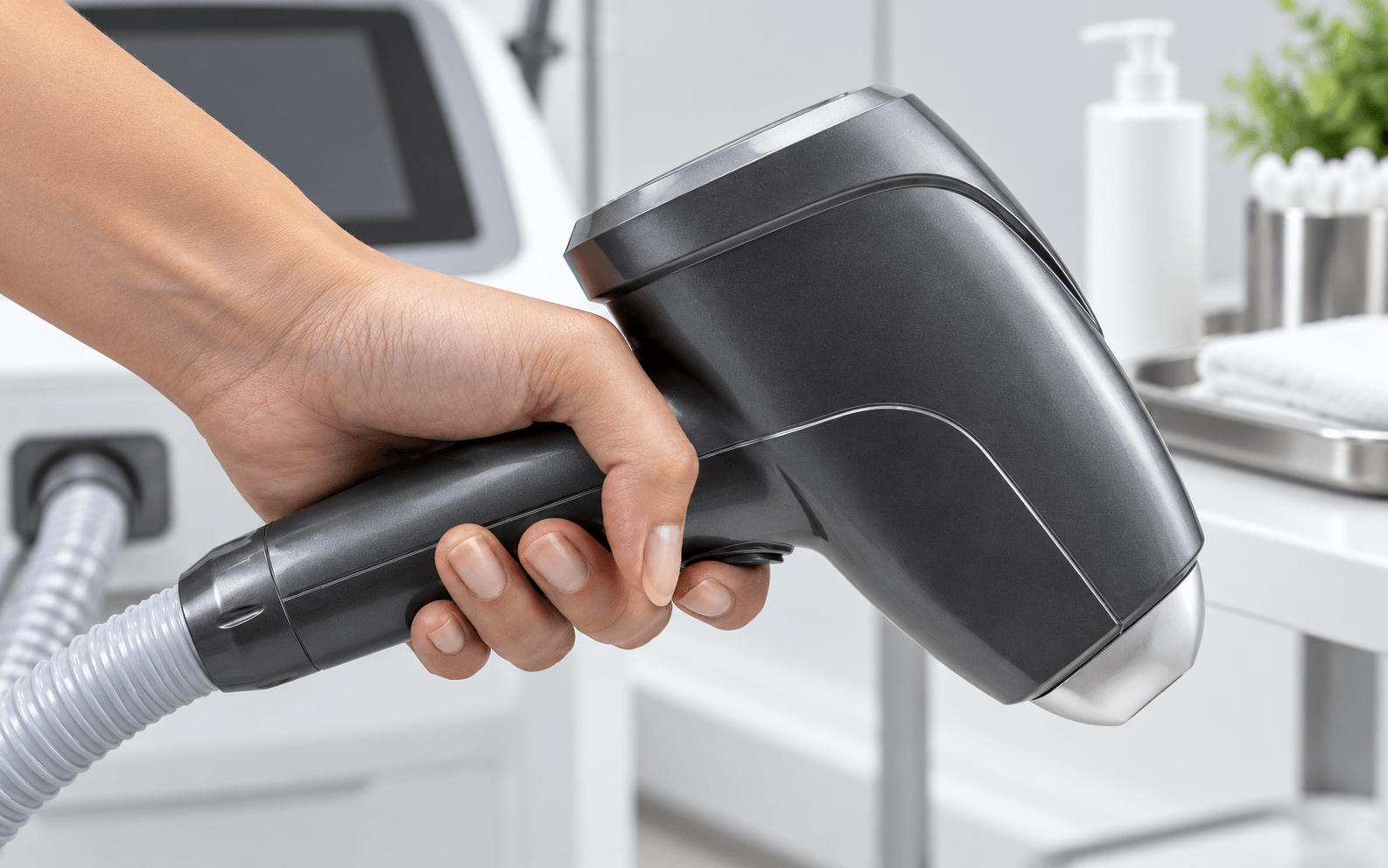
The base cabinet is only part of a laser purchase. Confirm handpieces, fiber or arm where applicable, optics, cooling, protective eyewear, replacement tips, consumables, maintenance items and software options. Ask which items are standard versus optional and how a replacement is obtained.
The usable setup depends on electrical input, ventilation or water needs, delivery access and room safety controls. A clinic should assign installation, operator training and procedure governance locally. A distributor also needs first-line support and spare-parts routing.
- Source and wavelength or filter per module
- Spot, pulse and energy controls with units
- Cooling, eyewear and accessory list
- Utilities, room preparation and support route
03 / Buying guide
Ask for model-specific technical evidence
Request the quote, manual, specification sheet, product label and applicable test or conformity documents for the same model. Check legal holder, date, intended-use wording and market coverage. FDA states that US device establishment registration or listing is not product clearance or approval. The regulatory route depends on classification and intended use.
For EU medical devices, the first four EUDAMED modules became mandatory to use on 28 May 2026; buyers should check which role and product record applies rather than assuming a universal listing. These facts guide due diligence and do not imply that any site model has US or EU authorization.
04 / Buying guide
Plan operating costs and serviceability
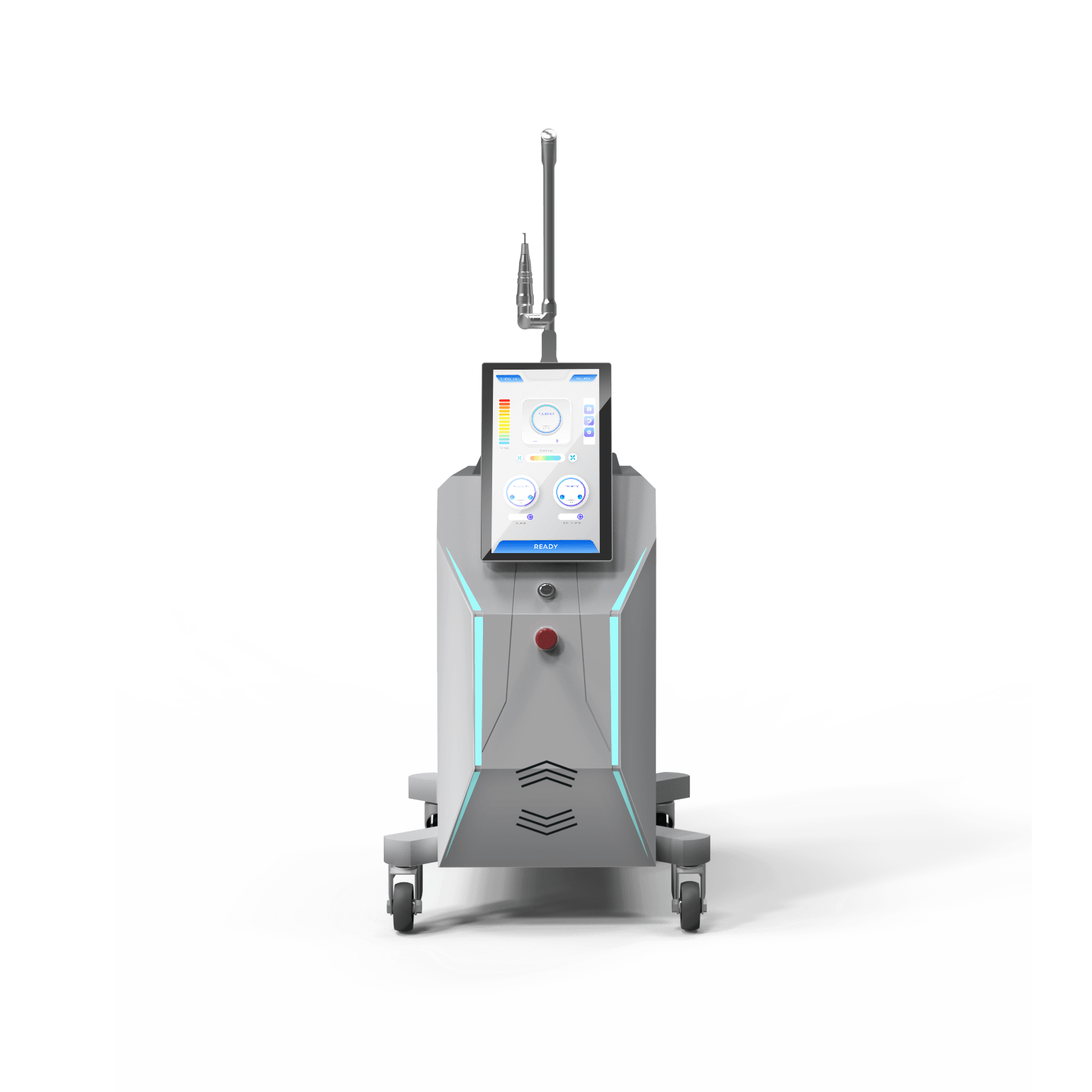
Compare the cost of the supplied optical path, replacement handpieces, consumables, calibration/maintenance, required training and expected downtime arrangements, not merely the machine price. Ask what diagnostic evidence support needs and whether loan units or local service exist; do not assume an advertised program applies to your territory.
Send an RFQ with the exact model, market, intended use, quantity, power supply, language, optical modules, accessories and delivery terms. Hold unresolved document gaps as explicit decision risks.
05 / Buying guide
Build a module-to-handpiece map
For each quoted handpiece, create a row with source or filter, wavelength or band, spot choices, pulse controls, cooling method, protective items and replacement parts. A multi-platform label can conceal several distinct optical paths; the map makes missing accessories or incompatible specifications visible. Ask whether the displayed values are adjustable by the operator, fixed by the system, or only available with an optional module.
For a demonstration, request the same exact configuration and software version that appears in the quote. Record the observed interface language, connections, startup checks and maintenance prompts. A demonstration unit with more modules than the offered bundle is not a fair test unless the differences are explicitly documented.
06 / Buying guide
A safer sequence for comparing offers
First screen on intended use and the buyer’s legal/clinical setting. Next verify source and optical configuration. Then check the applicable market documents and site safety requirements. Only after those gates should the team compare acquisition cost, recurring parts and service terms. This ordering prevents a low price from distracting from a missing document or unsuitable room.
Where a product is a regulated medical device, request the official record or declaration that actually covers the model and use; a supplier badge is not enough. Where it is not, still confirm laser-product safety and local operator requirements. Obtain qualified local advice rather than treating this guide as a universal regulatory classification.
Comparison visual
Technology terms buyers should not collapse
Diode / Nd:YAG / CO₂
Source family
Exact wavelength, optical path and intended use
IPL
Broad-spectrum pulsed light
Filters, pulse controls and classification
Fractional
Delivery pattern
Underlying source, spot pattern and handpiece
Multi-platform
Shared chassis or modules
Which module and controls are actually included
Decision flow
Laser purchase review
- 01
Use case
Intended service and destination market.
- 02
Optics
Source, module, wavelength/filter and controls.
- 03
Evidence
Match quote, label, manual and market documents.
- 04
Readiness
Room safety, training, parts and support.
Practical table
Fields for a laser quotation request
Each checklist row shows every comparison field.
| Area | Ask for | Reject ambiguity such as |
|---|---|---|
| Identity | Exact model and legal seller | “Same series” |
| Optics | Each module and handpiece | One wavelength for all functions |
| Safety | Cooling and protective items | “Standard accessories” |
| Documents | Holder, scope, validity and market | Generic badge |
| Service | Parts and escalation route | Undefined “support” |
Buyer FAQ
Frequently asked questions
Is IPL a laser?
No. IPL uses broad-spectrum pulsed light; a laser is a different light source. Compare intended use and configuration rather than grouping them by marketing label.
Does a wavelength prove clinical suitability?
No. Source, controls, delivery optics, intended use, safety arrangements and market-specific requirements all matter.
Does FDA registration mean a laser model is cleared?
No. FDA establishment registration and device listing do not indicate product clearance or approval.
Source notes
References and further reading
External references provide general regulatory or industry context; they do not establish approval of a listed product. Accessed 22 September 2026.
Turn the checklist into a model-specific quotation
Send the exact model, destination market, quantity and configuration you need. Ask for the applicable documents and service scope in the response.
Request a quotation →