
TL;DR · Direct answer
The buying decision in brief
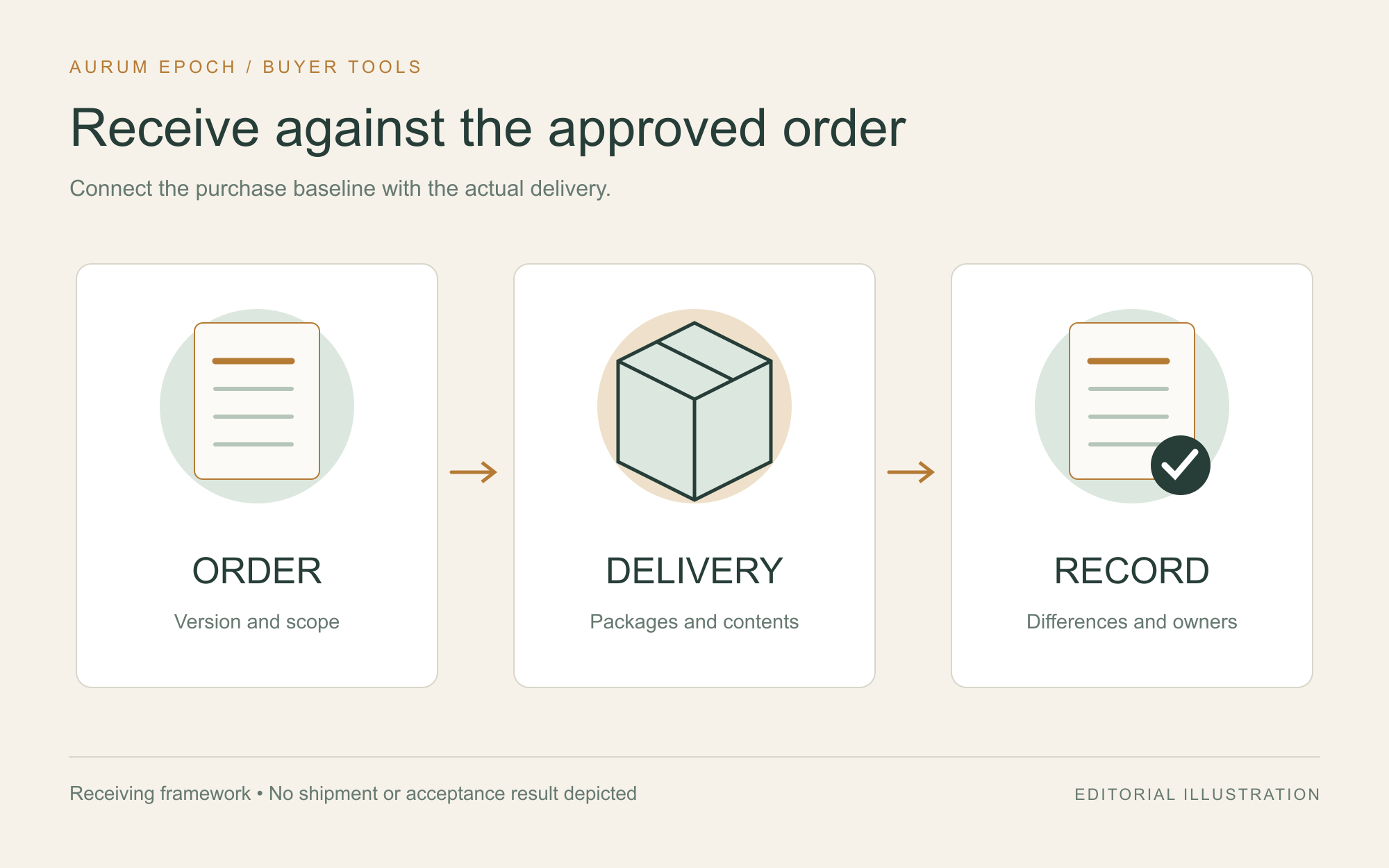
A beauty equipment receiving inspection checklist compares the delivery with the approved order, itemized configuration and packing records. Record package condition, model identifiers, quantities, accessories and document versions, then assign discrepancies to a named owner. Keep delivery observations separate from technical acceptance and permission to use the equipment. Close each affected item with written evidence before handing the receiving record to the next responsible team.
01 / Buying guide
Give the receiving team one current purchase baseline
Before the delivery arrives, assemble the approved order or quotation reference, exact model, selected configuration, expected quantities and packing information. Add the current accessory list and the document versions the parties have agreed to supply. A generic catalogue is useful for browsing, but the receiving team needs the version that describes this purchase. Identify who can answer a commercial question and who controls the technical documents.
Create a receiving record for the actual delivery, not just the overall purchase. A split delivery may contain only some approved lines. Keep expected, received, outstanding and disputed quantities in separate fields so a later package does not erase an earlier shortage. Record the destination site, delivery date and receiver, with links to the underlying purchase references rather than copying information from an old order.
- Purchase reference and approved revision
- Exact model, configuration, market and expected items
- Delivery reference, receiver, date and open order lines
02 / Buying guide
Record the packages before deciding what happens next
Identify each package against the delivery and packing references. Note the package count and describe visible concerns precisely: which carton or crate, where the mark or damage appears, and what was observed. Where it is safe and permitted, retain dated photographs that connect the concern with the relevant package identifier. Keep labels readable for the responsible parties while protecting customer and delivery details from public sharing.
Check the applicable order, carrier and supplier instructions before deciding whether to accept, qualify or refuse a delivery. Published supplier policies differ, so a general checklist cannot set one universal refusal rule or notification deadline. Contact the named responsible party promptly when a decision is needed. Retain relevant packaging and evidence in line with the applicable instructions; do not arrange disposal, repair or return based only on an informal assumption.
03 / Buying guide
Reconcile the device, included items and document versions
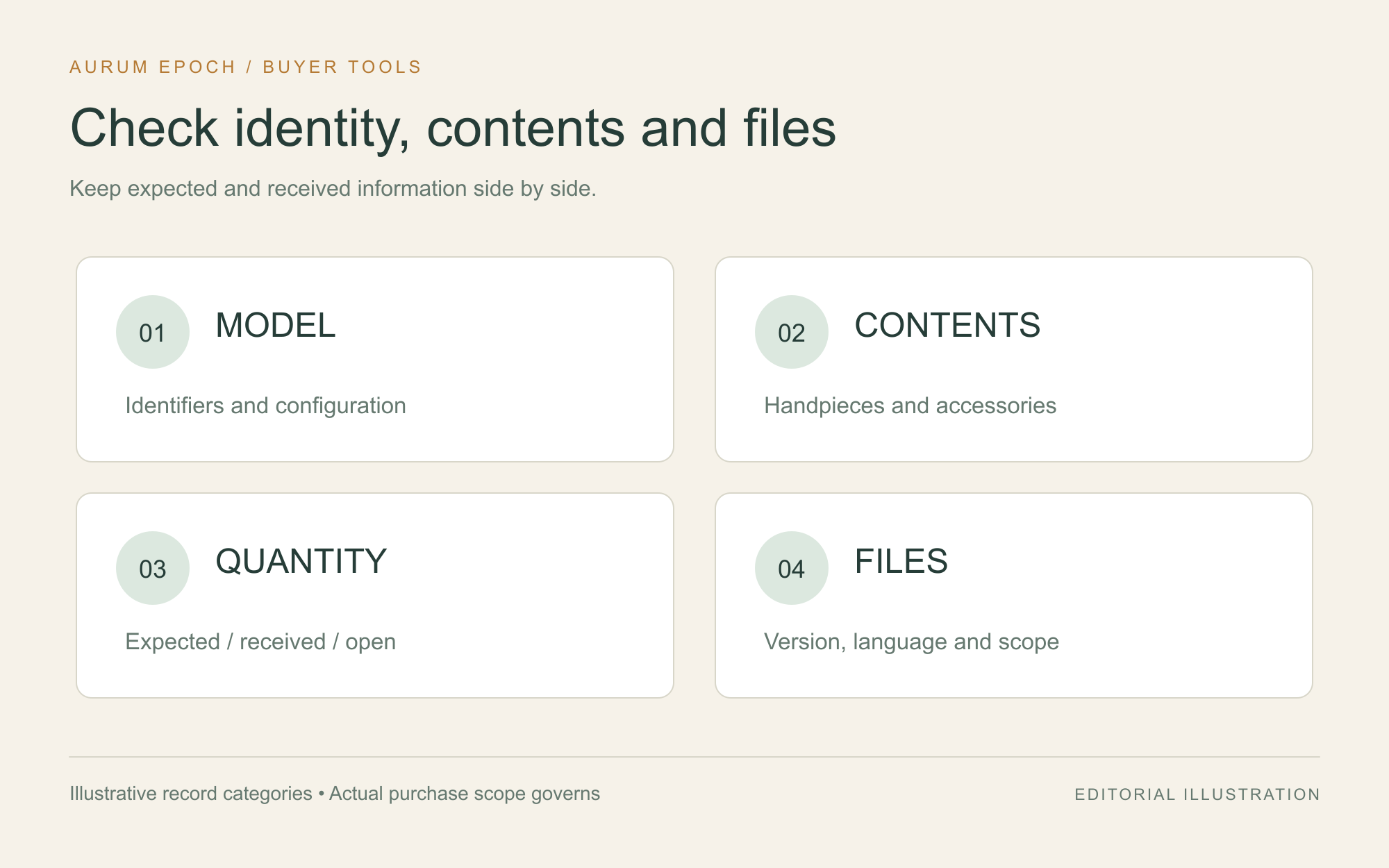
When unpacking is appropriate under the applicable instructions, compare the equipment identification with the approved model and configuration. Record the serial or other identifier when it is actually present and relevant. Use the itemized list to count handpieces, modules, accessories and consumables. Keep optional items separate from included items: a photograph showing an accessory is not an order line, and a similar connector does not establish compatibility.
Check the names, versions, languages and model coverage of the supplied manuals and other agreed documents. If an identifier differs, record the exact difference and ask the document owner to reconcile it. Do not rename a conflicting file to make it look current. Link the receiving record to the identity and configuration evidence that resolves the question, preserving the earlier file and the response history.
- Expected item and quantity / received item and quantity
- Device and accessory identifiers where available
- Document title, version, language, scope and source
04 / Buying guide
Keep delivery checks separate from release for use
A completed package and contents check answers what arrived. It does not by itself answer whether a device is ready for operation. Keep technical acceptance, installation, site readiness and operator handover as separately owned activities. Identify the applicable model instructions, qualified personnel and required records before those activities begin. Do not switch on equipment, open its enclosure or improvise a test just to fill a blank checklist field.
For UK health and social-care medical devices, MHRA guidance distinguishes delivery records and the skills needed for further checks. Scotland’s January 2024 SHTN draft also discusses incoming records within its own healthcare context. These references help explain the separation of responsibilities; they do not classify every beauty device or certify an Aurum Epoch model. Route product-specific safety and market questions to the appropriate competent reviewer.
05 / Buying guide
Turn a difference into an owned, bounded action
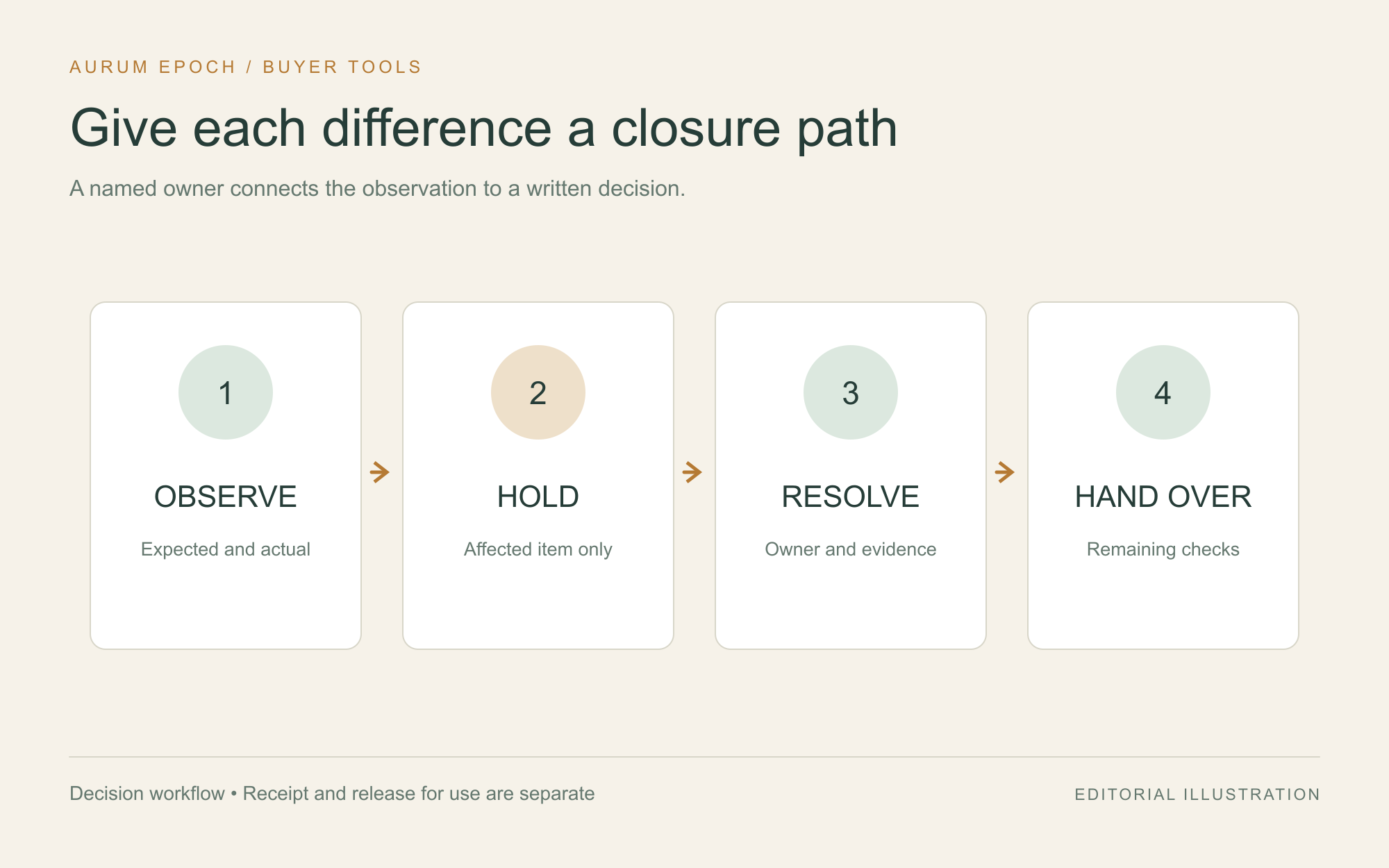
Open a discrepancy row for damage, a shortage, an unexpected item, a model mismatch or a conflicting document. State the expected reference, observed difference, supporting evidence and affected item. Use a practical status such as awaiting clarification, held for review, replacement pending or closed with evidence. A status should tell the next person what is outstanding; it should not disguise an unresolved difference as a completed check.
Assign an answer owner, a buyer decision owner and the next review date. Specify the activity or item that must wait and whether other lines depend on the same issue. A proposed replacement is a new decision requiring written scope, not automatic closure. Preserve the original observation when a new document or item arrives, then link the response and the buyer’s scoped decision to that same row.
06 / Buying guide
Close the record and hand over the remaining work
Close a discrepancy only when the record shows the agreed disposition and its evidence: for example, an identified missing accessory received, a corrected document supplied, or a written decision covering a specific difference. Name the person who accepted that closure and the date. If a functional or safety assessment is still outstanding, keep it visible as a separate activity rather than marking the entire device ready for use.
Send the next responsible team the final received inventory, current document references, closed differences and remaining conditions. Keep the original order, delivery observations and later responses connected for future service or purchase questions. The useful outcome is a traceable receiving decision for this delivery. Use the shipping and handover guides for the work immediately before and after it, rather than expanding the receipt checklist into an operating manual.
Comparison visual
Compare the delivery with the approved record
Packages
Delivery reference and expected package count
Record actual count, identifiers, condition and any carrier instruction needed
Equipment identity
Approved model and configuration
Record identifiers seen and route any mismatch to the decision owner
Included contents
Itemized handpiece, accessory and consumable list
Separate received, outstanding, unexpected and disputed items
Documents
Agreed title, revision, language and model coverage
Link the received version and hold unresolved conflicts
Release for use
Applicable instructions and separately assigned checks
Identify remaining technical or handover activities; receipt alone is insufficient
Decision flow
From delivered packages to a documented handoff
- 01
Prepare
Assemble the approved purchase baseline and name receiving contacts.
- 02
Observe
Record actual packages and visible concerns with dated evidence.
- 03
Reconcile
Compare identifiers, quantities, contents and document versions.
- 04
Resolve
Hold affected items, assign questions and obtain scoped written decisions.
- 05
Hand over
Share the final inventory, closure evidence and remaining checks.
Practical table
Reusable receiving and discrepancy record
Each checklist row shows every comparison field.
| Record field | What to enter | Closure question |
|---|---|---|
| Purchase baseline | Order/quote reference, revision, model, configuration, market and expected quantities | Which approved purchase does this delivery serve? |
| Delivery | Delivery reference, site, date, receiver and package identifiers/count | Can the actual delivery be reconstructed? |
| Contents | Expected/received item, identifier, quantity and outstanding balance | Are missing, extra and optional items separate? |
| Documents | Title, holder/source, version, language and applicable model/configuration | Do the received files match the agreed scope? |
| Difference | Expected value, observed value, affected item and evidence reference | What precisely needs an answer? |
| Responsibility | Response owner, buyer decision owner, next action and review date | Who answers, who decides, and what waits? |
| Written closure | Disposition, response reference, decision maker, date and conditions | Is the difference closed with evidence? |
| Next-stage handoff | Current inventory, open conditions and technical/handover owners | What remains before any release for use? |
Buyer FAQ
Frequently asked questions
What should I record if an accessory is missing?
Identify the approved order line, expected accessory and quantity, actual contents, package references and supporting evidence. Assign a response owner and keep the missing item open until its agreed disposition is documented.
Does undamaged packaging mean the equipment has passed acceptance?
No. Packaging condition is one observation. Device identity, contents and files still need reconciliation, and any required technical or pre-use checks need their own instructions, personnel and records.
Should I always refuse a damaged delivery?
Follow the applicable order, carrier and supplier instructions and obtain direction from the responsible party. Terms differ; this guide does not set a universal refusal rule, claim period or compensation entitlement.
What if the model or manual revision is different?
Record the expected and received identifiers, preserve the original evidence and ask the responsible owner for a written reconciliation. Hold the affected decision until the difference and its implications are resolved.
Source notes
References and further reading
External references provide general regulatory or industry context; they do not establish approval of a listed product. Accessed 1 November 2026.
Prepare the receiving questions with your equipment request
Send your model, configuration, target market, order or quotation reference, receiving requirements and unresolved questions. A focused request helps connect the purchase scope with the records your receiving team needs.
Request a quotation →