TL;DR · Direct answer
The buying decision in brief
Useful OEM beauty equipment partner questions connect a buyer’s target market, baseline model and brand scope to a specific answer, evidence source and responsible party. Ask what the candidate would undertake, what is excluded, which project documents would support its response and what remains open. Compare those answers before moving to a detailed brief, sample decision or commercial commitment.
01 / Buying guide
Turn the project goal into answerable questions
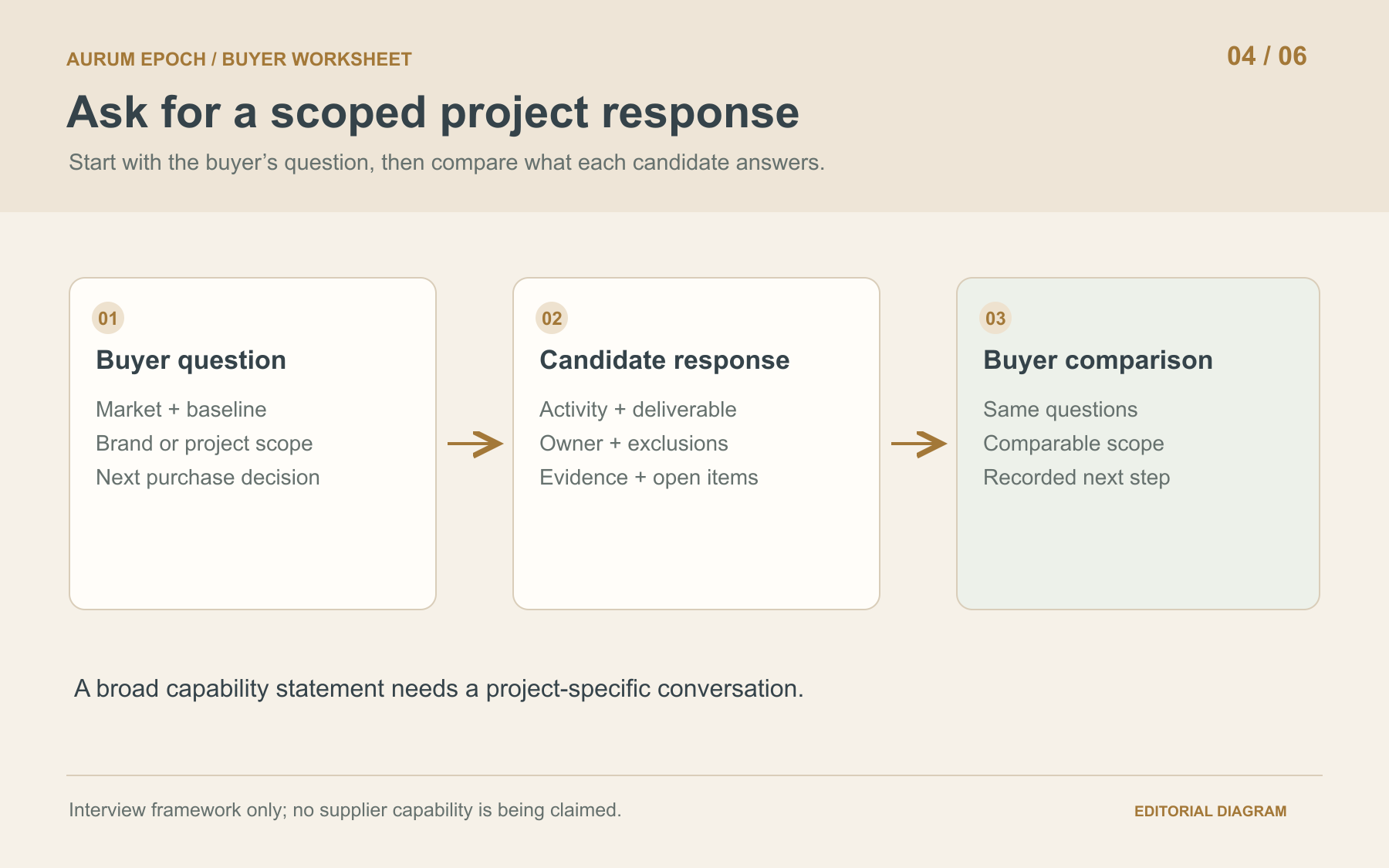
Open with the buyer’s product direction, destination market, baseline model or category, proposed configuration, brand scope and project stage. Explain whether the first decision concerns a branded existing configuration, an equipment change or an early concept. These situations require different evidence and responsibilities, even when candidates use the same OEM or ODM label.
Ask which parts of this defined project the candidate’s response would cover and which remain with the buyer or another party. Attach a dated scope summary rather than unrelated reference photographs. If there is no selected baseline, say so and ask what information is needed for a meaningful discussion. Keep a candidate suggestion separate from a buyer-approved requirement.
- Target market, buyer role and product direction
- Baseline model/configuration if already identified
- Brand scope, sample objective and next buyer decision
02 / Buying guide
Separate branding, equipment changes and document work
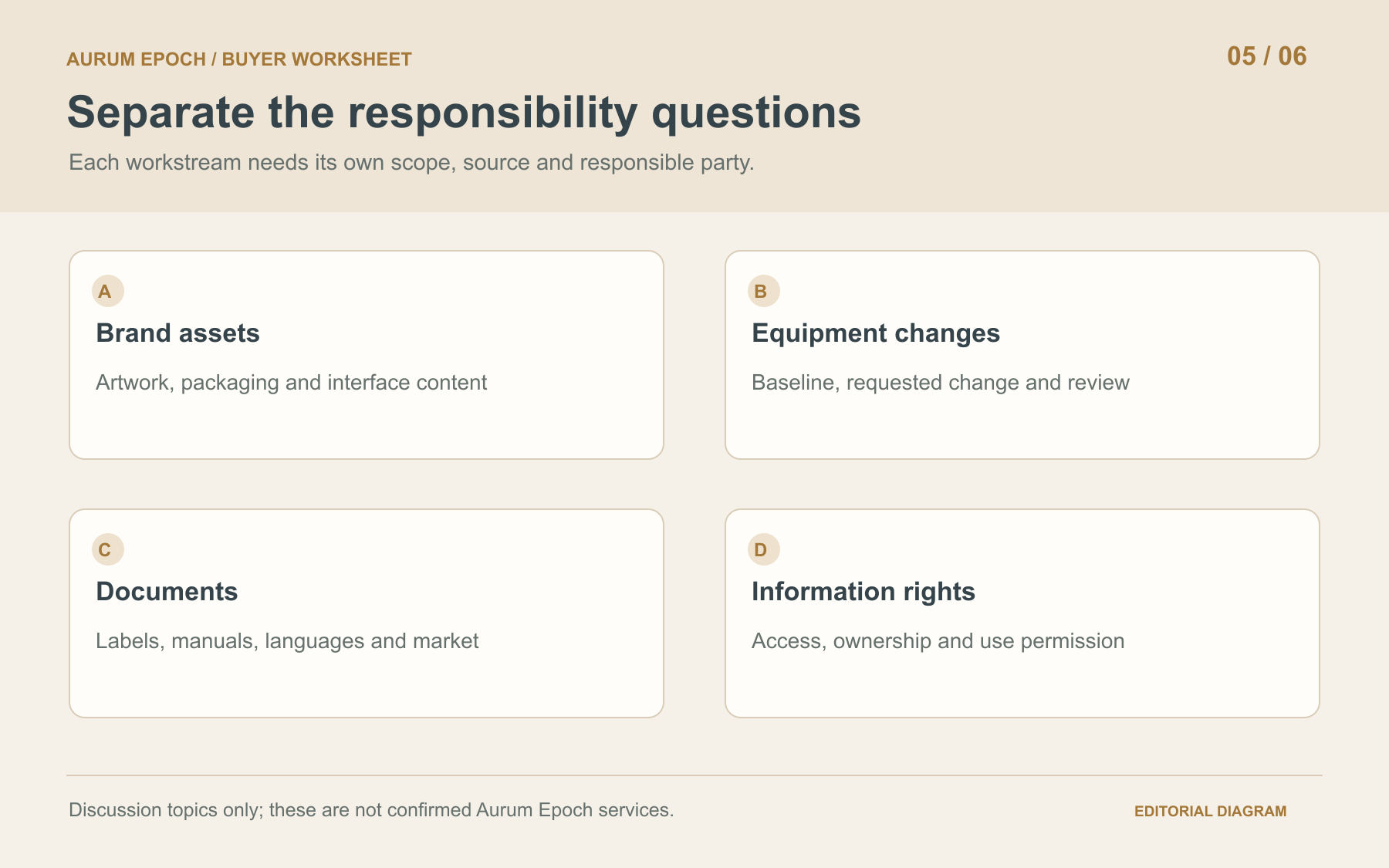
Ask separately about logo and artwork use, packaging, labels, manual language, interface content and proposed hardware or software changes. For each topic, request the stated deliverable, buyer inputs, responsible party, exclusions and decision point. An answer about printing a logo does not describe engineering, and an answer about a cabinet does not settle software or document scope.
Ask who would prepare and approve each file, which model and configuration it would cover, and how a change would appear in the quotation, sample reference and later documents. Record the response without treating the conversation as an agreed service. Move detailed artwork checks and project-brief preparation to later reviews once the proposed responsibilities are clear.
03 / Buying guide
Ask what supports this project beyond the brochure
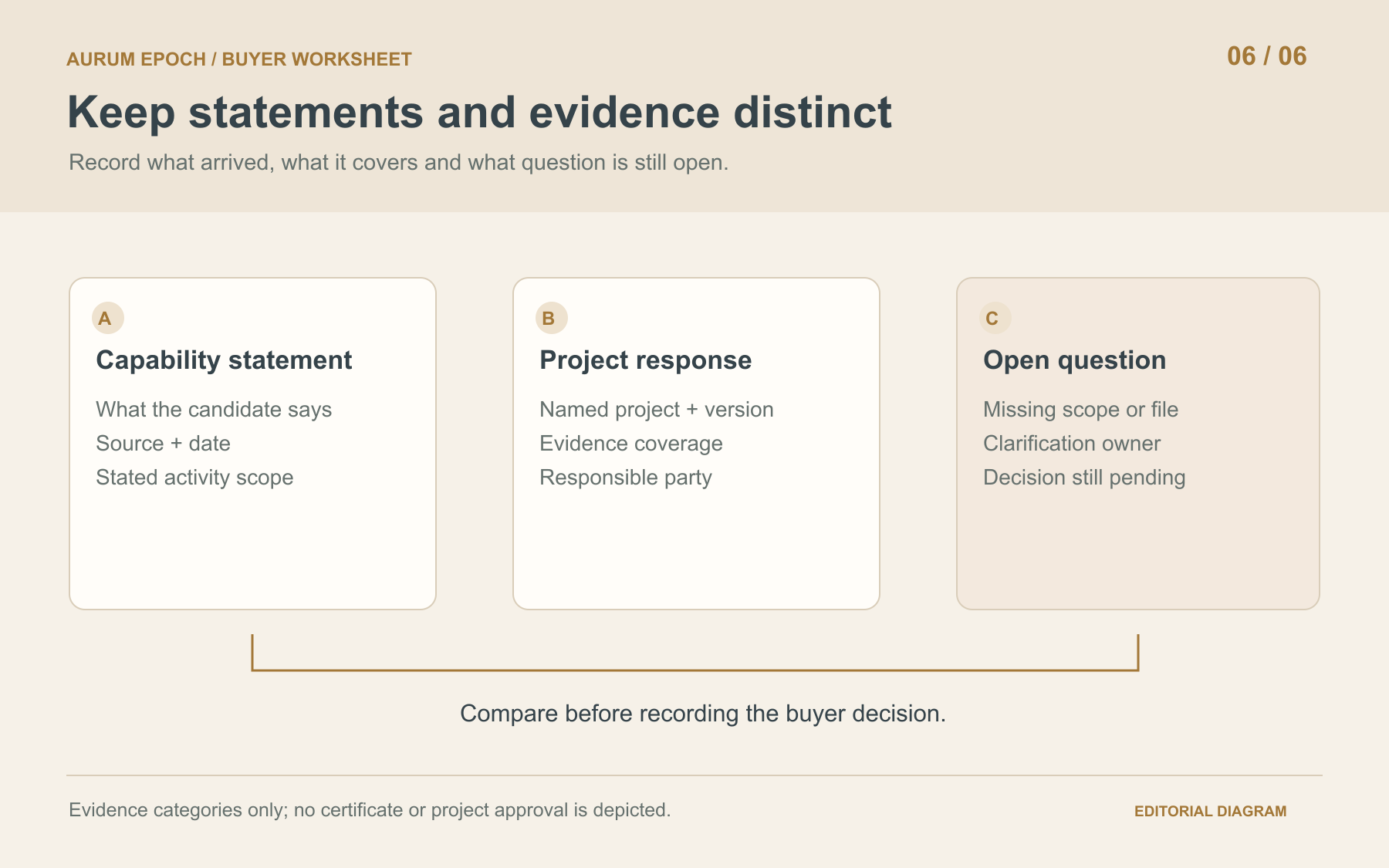
Use separate columns for a capability statement, project-specific written response and unresolved question. For a certificate, report, example or catalogue, ask for its holder, source, applicable model or activity, version and stated market scope. A similar project helps frame questions but does not establish that the proposed configuration, claims or responsibilities are covered.
Ask who would assess destination-market requirements and what records would support that assessment. A quality-system certificate and product-specific market authorization address different questions. ISO 13485 concerns medical-device quality management; FDA’s QMSR has a defined U.S. scope. Establish the actual product, role and jurisdiction before applying these references, with regulatory decisions assigned to suitably qualified reviewers.
04 / Buying guide
Define the purpose of any proposed sample or test
Ask what a proposed sample would represent: appearance, a specified configuration, documentation or another defined review objective. Which items would be included, which differences from the proposed order would remain, and who would record the review? These questions define a possible sample discussion without assuming that a sample service, price, timetable or minimum quantity is available.
For a design change or test, ask who would define the method, acceptance criteria, records and responsibilities. Distinguish an observable demonstration from a documented test result. Request written terms for proposed activities, exclusions and later scope changes. Keep sample acceptance separate from approval of a production order, training arrangement or target-market claim.
05 / Buying guide
Clarify access, ownership and permission to use files
Before sharing sensitive brand or technical files, identify the recipient, purpose and access scope. Ask which assets the buyer supplies, which pre-existing materials the candidate proposes to use, and which project outputs need an ownership or use-permission agreement. Include images, artwork, interface content, manuals and design files rather than discussing the brand as a single asset.
Ask how access by another party would be handled and who would resolve rights questions before work proceeds. WIPO’s agreement and trade-secret resources provide starting vocabulary, but rights, confidentiality and contract effects depend on the actual arrangement and applicable law. Obtain appropriate legal review; a supplier conversation or confidentiality form alone does not settle every ownership issue.
06 / Buying guide
Compare scoped responses and choose the next step
Send each candidate the same baseline questions and compare answers by topic rather than presentation length. Record the response, source, date/version, activity covered, responsible party, exclusions and open question. Keep “statement received,” “project evidence received,” “clarification pending” and “buyer decision recorded” as distinct statuses. Receiving a file does not mean the buyer has checked or accepted it.
Pause a shortlist decision when a critical model, market, responsibility, evidence scope or rights question remains unresolved. Request a specific written clarification, preserve the earlier response and compare again. Once the buyer has enough scoped answers, prepare a detailed brief or quotation request. This interview framework does not establish Aurum Epoch OEM, design, testing or production capabilities.
Comparison visual
Compare the answer behind the OEM claim
Brand scope
“Private label supported”
Named artwork, label, packaging or interface deliverables; owner and exclusions
Equipment change
“Customization available”
Defined change, activity scope, evidence needed and responsible party
Sample objective
“We can send a sample”
Represented configuration, inclusions, exclusions, review objective and terms
Market documents
Certificate image or another product example
Holder, model/activity coverage, version, market and assessment owner
Information rights
“Your design is protected”
Recipient/access scope and ownership/use questions assigned for agreement
Decision flow
From early questions to a scoped next step
- 01
Frame
State the market, baseline/configuration, brand scope and next decision.
- 02
Ask
Separate branding, equipment changes, files, samples and rights questions.
- 03
Document
Record source, scope, owner, exclusions and missing evidence.
- 04
Compare
Apply the same questions to candidates and resolve critical gaps.
- 05
Choose the next step
Prepare a detailed brief or quotation request when ready.
Practical table
Reusable OEM partner interview record
Each checklist row shows every comparison field.
| Question group | Fields to capture | Question to close |
|---|---|---|
| Buyer baseline | Product goal, model/configuration, target market, stage, owner and date | What exact project is being discussed? |
| Brand and equipment scope | Deliverable, responsible party, inputs and exclusions | Which activities does the response cover? |
| Evidence | Statement, file/source, holder, scope, version and review status | Does this evidence address the proposed activity? |
| Sample and test | Objective, configuration, method/criteria owner, limits and terms | What decision would this activity support? |
| Labels, manuals and languages | Owner, applicable model/market, version and review responsibility | Who prepares and who checks each item? |
| Rights and confidentiality | Asset source, recipient, access purpose, rights question and review owner | What needs agreement before sharing or work? |
| Candidate comparison | Same question, response, source/date, exclusions and open items | Are the responses comparable? |
| Decision | Clarification owner, written reply, reviewer/date, status and next step | Is the buyer ready to brief, request terms or pause? |
Buyer FAQ
Frequently asked questions
What should I ask an OEM beauty equipment partner first?
State the market, baseline model or category, configuration and brand scope, then ask which activities the response would cover and who would own them.
Is private labeling the same as equipment design?
The terms alone do not define the work. Ask separately about artwork, packaging, labels, interface content and hardware or software changes, with deliverables and responsibilities for each.
How should I compare candidate certificates?
Record source, holder, model or activity scope, version and market context. Refer applicability to an appropriate qualified reviewer; a certificate image is not a complete project-specific response.
Can another project establish my sample terms or MOQ?
No. Ask for the proposed sample objective and written commercial scope for your baseline, configuration and market. Record quantity, price and timing only when supplied for that request by the responsible party.
Source notes
References and further reading
External references provide general regulatory or industry context; they do not establish approval of a listed product. Accessed 21 October 2026.
Bring a scoped partner enquiry
Share the target market, baseline model and configuration, brand or project scope, sample objective and current files. Include the responsibilities you want discussed and questions still open before requesting a quotation.
Request a quotation →